
Sewer excavation means opening the ground to reach your sewer lateral, the pipe that carries everything from the house to the city main, so a collapsed, sagging, or broken section can be repaired or replaced. In Elizabeth the run to the city main can cross a sidewalk or street, which brings a utility mark-out, a street-opening permit, and pavement restoration into the job.
How MainStreet fits in: MainStreet Service Pros does not dig or perform sewer work. We take the details of your sewer problem, route the request to an independent sewer and excavation contractor that works in your part of Union County, and follow up so the estimate actually arrives. The contractor scopes, prices, permits, and performs the work.
When a sewer line has to be dug up instead of cleared or lined
Most sewer calls start with clearing the line and running a camera. Excavation usually comes up when the footage shows one of these:
- Collapse: part of the pipe has caved in and there is no open bore left to clean or line.
- Belly or sag: a low section holds standing water and refills with waste after every cleaning.
- Severe offset or separated joint: one section has shifted out of line and catches solids.
- Break letting in soil or roots: the blockage returns soon after each cleaning.
- Flattened or blistered fiber (Orangeburg) pipe: a deformed pipe can be hard to line, so ask whether lining is possible at all.
- Failed connection at the city main: the problem sits at the tap, where your lateral meets the main.
Trenchless lining or pipe bursting can avoid a long trench when the pipe keeps its shape, the slope is workable, and there is access at both ends. If you have not had the line cleared and inspected yet, start with our sewer line repair and camera inspection page.
What is different about sewer excavation in Elizabeth
- Elizabeth has combined sewers. The City of Elizabeth has a combined sewer system, where stormwater and sewage share pipes, and the city reports flooding that reaches curb height and affects homes several times a year (NJ Infrastructure Bank, January 2024). If your basement backs up only in heavy rain, the cause may be the city system rather than your lateral, so ask for camera evidence before paying for a dig, and ask whether a backwater valve fits your property.
- The city is investing in its sewers. In January 2024 the NJ Infrastructure Bank reported a $16.5 million NJ Water Bank loan to Elizabeth for South Second Street drainage work and an underground overflow tank on Atlantic Street (NJ Infrastructure Bank). Street work near your block can affect access and scheduling, so ask the contractor to check.
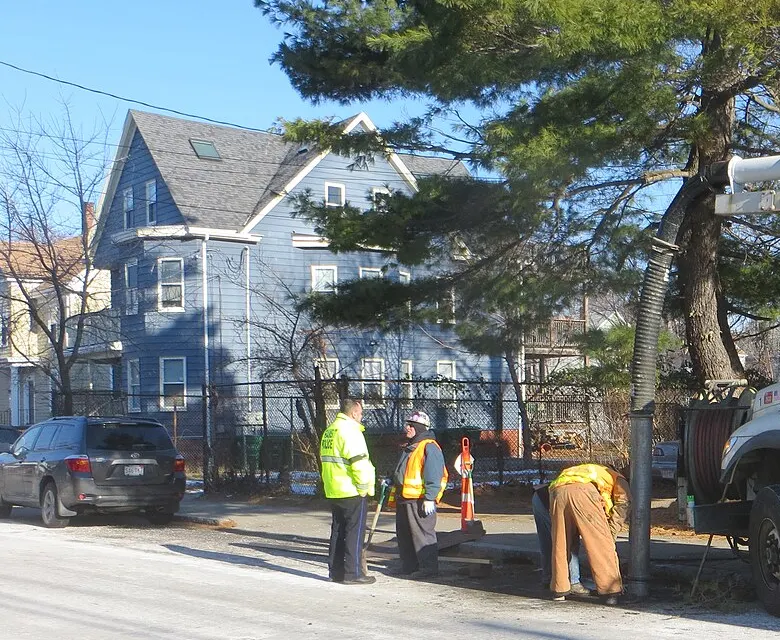
- Call 811 before anyone digs. New Jersey requires anyone who plans to dig to give at least three business days' notice by calling 811 (NJ Board of Public Utilities). Marks stay valid for 45 business days (811 Before You Dig).
- Private lines are not marked. 811 marks the utilities' lines. Lines you own, such as a feed to a detached garage or lawn sprinklers, are your responsibility to locate, so tell the contractor about them.
- Who owns the street section varies. In most New Jersey towns the owner is responsible for the lateral up to the city main, but the rules differ. Ask the City of Elizabeth where your responsibility ends before the work is scoped.
- Street openings need a permit. Opening a sidewalk, curb, or road needs a street-opening permit from whoever owns that road: the city, Union County, or the state. The estimate should say who pulls it.
Why the numbers matter
- Excavation is the leading cause of damage to underground utility lines, according to the NJ Board of Public Utilities.
- New Jersey's One Call center handles more than 700,000 calls a year (NJ BPU).
- A national Common Ground Alliance survey found 40 percent of homeowners planning to dig would skip the 811 call (cited by the NJ BPU).
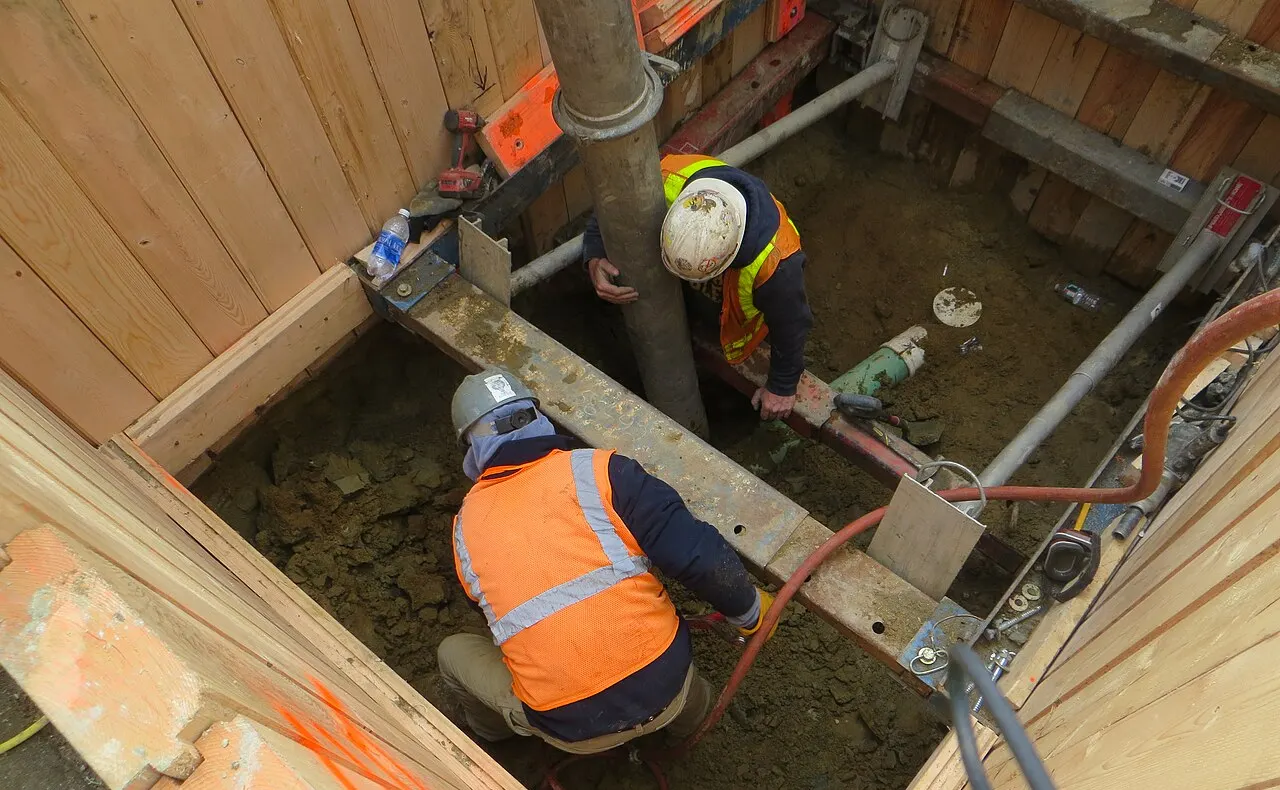
- Trenches 5 feet deep or more need a protective system such as sloping, shoring, or a trench box (OSHA trenching fact sheet). Ask how deep your lateral is and how the trench will be protected.
- Wastewater earned a D+ on the American Society of Civil Engineers' 2025 report card, and collection system failures at combined utilities rose from 2 to 3.3 per 100 miles of pipe (Water & Wastes Digest, March 2025).
What a sewer excavation job usually includes
- Camera inspection and locating the line, with the depth and route marked on the surface.
- The 811 mark-out and any street-opening and plumbing permits.
- The dig itself: a trench along the line or a pit at the failure, protected when it is 5 feet or deeper.
- Repair or replacement of the damaged section, plus a cleanout where one is missing.
- Inspection of the open work where the town requires it.
- Backfill and compaction.
- Surface restoration: lawn, concrete, sidewalk, curb, or asphalt.
- A final camera run showing the line flows.
What drives the price
- How deep the pipe is and whether the trench needs shoring.
- How long the damaged run is, and whether a spot repair or a full replacement is needed.
- What sits on top: lawn is cheaper to restore than a driveway, sidewalk, or street.
- Whether the connection at the city main has to be redone.
- Permit, inspection, and street-opening fees.
- Groundwater or loose soil that slows the dig.
- Extras such as a new cleanout or a backwater valve.
For per-foot prices on digging vs. trenchless and a 50-foot example, see our sewer line replacement cost guide. For repair methods and prices, see the sewer line repair cost guide. Ask for an estimate that lists excavation, pipe work, permits, and restoration separately, so two quotes can be compared line by line.
Before you hire anyone to dig
- Get the camera footage and the marked location of the failure.
- Ask for a written scope that says who calls 811 and who pulls the permits.
- Confirm restoration is included, and to what finish.
- Ask for the contractor's New Jersey license number and check it on the state's license lookup.
- Ask for a certificate of insurance.
- Ask what happens to the price if the open trench shows something the camera did not.
- Ask what warranty covers the pipe and the restored surface.
Where we take sewer excavation requests
Elizabeth, Linden, Union, Hillside, Roselle, Rahway, Cranford, Westfield, Clark, Kenilworth, Springfield, and the rest of Union County, plus Newark and Jersey City. Tell us the street and town, and the request goes to a contractor that works there.